Policy
UPI MDR Explained: Is UPI No Longer Free After the 0.4% Rule?
Since 15 October 2026, some UPI payments carry a fee. Almost none of it lands on you. Here is who pays, when, and what to do if a shop tries to charge you.

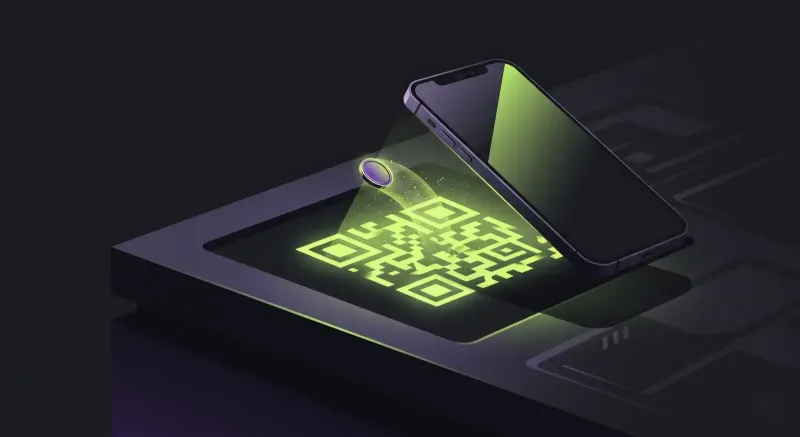
For ten years, "UPI is free" was one of the simplest facts in Indian finance. So when headlines in September said UPI payments above ₹2,000 would attract a charge, a lot of people assumed they would start paying to use Google Pay or PhonePe.
That is not what happened. The change is real, but it is narrow, and it sits on the merchant's side of the transaction. This guide walks through what actually changed and what you should do if someone tries to pass the cost on to you.
What is MDR?
MDR stands for Merchant Discount Rate. It is the fee a business pays its bank for accepting a digital payment. You already see this world with cards: shops pay a cut of every card payment, which is why some small stores prefer cash or UPI.
UPI had zero MDR for most payments for years, with the government covering costs through incentives. The new framework, announced by NPCI with an FAQ on 15 September 2026, brings back a limited MDR to help pay for infrastructure, fraud prevention and cybersecurity as UPI volumes keep growing. For scale, UPI processed 2,451 crore transactions worth ₹29.9 lakh crore in August 2026 alone, according to figures cited in the government's FAQ.
What exactly changed on 15 October 2026?
Here is the rule in one line: a 0.4% MDR applies to specified P2M UPI payments above ₹2,000, with a maximum of ₹300 per transaction.
Some worked examples:
Payment to a large merchant | MDR the merchant pays |
|---|---|
₹1,500 | Nothing (below ₹2,000) |
₹3,000 | ₹12 |
₹50,000 | ₹200 |
₹75,000 or more | ₹300 (the cap) |
The ₹300 cap kicks in at ₹75,000, because 0.4% of ₹75,000 is exactly ₹300. A ₹1 lakh payment would otherwise cost ₹400, but the cap holds it at ₹300.
Certain sectors such as fuel, insurance, utilities and railways get lower flat rates instead of the 0.4% figure. UPI AutoPay payments for things like SIPs stay outside the prescribed MDR.
What stays completely free
Most of what an ordinary user does on UPI is untouched:
P2P transfers. Splitting a dinner bill, paying rent to an individual landlord or sending money home costs nothing, at any amount.
Merchant payments up to ₹2,000. Groceries, auto rides, chai, most online orders.
Small merchants. Shops that receive up to ₹1 lakh a month through UPI QR payments fall under the P2PM (person-to-person merchant) framework and are exempt.
NPCI data shows that in August 2026, 86% of P2M UPI transactions were below ₹500 and another 10% were between ₹501 and ₹2,000. In other words, roughly 96% of merchant payments by count fall below the threshold.
Can a shop charge you extra for paying by UPI?
No. This is the most important part of the rule for consumers. NPCI has said merchants cannot pass the MDR on to customers, and consumers should pay only the posted price. UPI app providers also cannot add a platform fee or similar charge for these payments.
If a shop adds a "UPI charge" or asks for 0.4% extra on a large bill:
Point out that the posted price is what you owe and that NPCI rules don't allow a surcharge.
Ask for an itemised bill showing the extra charge.
If they insist, complain to the shop's payment provider or bank (the name is usually printed on the QR standee), or through your UPI app's help section.
What it means if you run a small business
If you sell through a UPI QR and stay under ₹1 lakh a month in UPI receipts, you remain exempt under the P2PM framework. Keep an eye on your monthly totals, because classification is based on your inward UPI volume over time, and growing shops can cross into the regular merchant category.
If you are a larger merchant, your bank credit on payments above ₹2,000 will be slightly lower than the bill amount. Build that into your pricing rather than adding a surcharge, which isn't allowed.
Why this happened now
UPI was never truly free; someone was paying for the servers, fraud checks and customer support behind it. Until now, that was mostly banks and government subsidies. The new framework shifts part of the cost onto large merchants and high-value payments, which can absorb it, while keeping the everyday experience unchanged.
Expect more fine print over the coming months. NPCI has said final operational details, fee sharing and category-wise caps run through its UPI steering committee, so rely on NPCI, RBI and your bank for updates rather than forwarded WhatsApp messages.
Related reading: How to check your PF balance on WhatsApp
Frequently asked questions
Do I have to pay a fee for UPI payments above ₹2,000?
No. The 0.4% MDR is paid by eligible merchants, not by consumers. You pay only the posted price.
Is sending money to friends on UPI still free?
Yes. Person-to-person UPI transfers remain free at any amount.
When did the UPI MDR start?
The revised MDR framework took effect on 15 October 2026.
What is the maximum UPI MDR on one payment?
₹300. The 0.4% fee is capped at ₹300 per transaction, which applies to payments of ₹75,000 and above.
Sources: NPCI FAQs on UPI MDR dated 15 September 2026, as reported by SCC Online, Business Today, Inc42, Kotak Neo and Moneylife; consumer-protection details from Oneindia and Brut; small-merchant exemption from TechCrunch and Cashfree. Rates and exemptions may be refined by NPCI's steering committee.
Further reading: Business Today: UPI MDR rules and FAQs · SCC Online: NPCI MDR FAQs explained
Related
Hardware
Upcoming Phones in India: December 2026 Launches to Wait For
Xiaomi 18 Pro, iQOO 16 and OnePlus 16R are the big flagships expected in India around December 2026, with Vivo X500 and Motorola Signature 27 already...
AI
ChatGPT Go Free Year Ending in India: Will You Be Charged ₹399, and How to Cancel
If you claimed free ChatGPT Go in India last year, your 12 months are ending. Here's when the ₹399 charge kicks in, how to cancel on web, Android and...
AI
Free AI Offers in India (November 2026): What Still Works and What Has Ended
Jio's free Gemini, Airtel's free Perplexity Pro and free ChatGPT Go have all closed to new users. Google's student offer is still open until 31 Decemb...
The stream
All storiesUpcoming Phones in India: December 2026 Launches to Wait For
Xiaomi 18 Pro, iQOO 16 and OnePlus 16R are the big flagships expected in India around December 2026, with Vivo X500 and Motorola Signature 27 already out. Here's what's confirmed so far.
Windows 10 ESU Now Runs to October 2027: How to Check Your PC Is Enrolled
Windows 10 Extended Security Updates for home users now last until 12 October 2027. But only enrolled PCs get them. Here's how to check, how to enroll for free, and when to plan your move.
GTA 6 PC Release Date: Everything Rockstar and Take-Two Have Actually Said
There is no official GTA 6 PC release date. Take-Two says any PC news will come from Rockstar. Based on GTA 5 and Red Dead Redemption 2, the realistic window is late 2027 to 2028.
ChatGPT Advanced Voice Is Being Retired on 11 December: What GPT-Live Changes
On 11 December 2026, ChatGPT retires Advanced and Standard voice and moves everyone to GPT-Live. Here's what GPT-Live does differently, what happens to custom GPTs and video, and your old chats.
ChatGPT Go Free Year Ending in India: Will You Be Charged ₹399, and How to Cancel
If you claimed free ChatGPT Go in India last year, your 12 months are ending. Here's when the ₹399 charge kicks in, how to cancel on web, Android and iPhone, and whether staying on Go is worth it.